In the world of space science, certain years become landmarks — moments when research, ambition, and innovation converge to reshape our understanding of the universe. For India, 2026 is set to be one such extraordinary year, particularly in the realm of solar exploration. With the Aditya-L1 mission already in orbit studying the Sun, the insights gathered over the next few years will reach a defining stage in 2026, potentially unlocking discoveries that could change how we view both our star and our planet.
India’s journey toward deep solar research is not sudden; it is the result of decades of scientific progress. Yet, 2026 stands out because the Aditya-L1 spacecraft will have completed a significant portion of its mission by then, collecting critical data at the Lagrange Point 1 (L1), located about 1.5 million kilometers from Earth. This vantage point offers a continuous, unobstructed view of the Sun — something no ground-based telescope can provide. By 2026, scientists are expected to gain a far richer and detailed understanding of solar activity, making it a truly pivotal year.
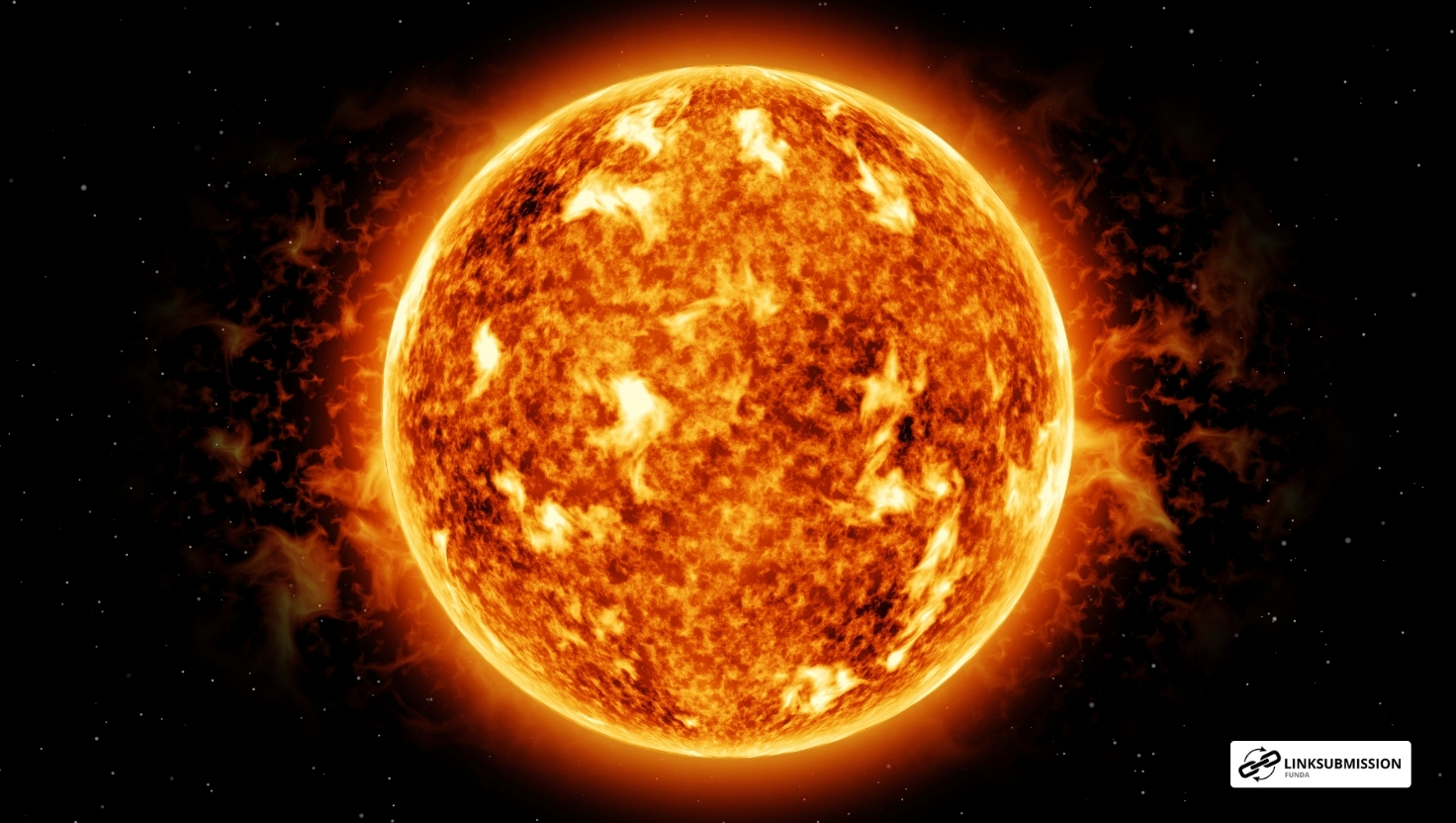
One of the most exciting aspects of this moment is the expected advancement in our understanding of solar storms and space weather. The Sun is not merely a glowing ball in the sky; it is an active, powerful force that launches flares and coronal mass ejections capable of disrupting communication systems, satellites, power grids, and even aviation routes on Earth. India’s extended observation of the Sun through Aditya-L1 is designed to improve predictive models for these events. By 2026, the data accumulated will allow researchers to forecast solar storms with far greater accuracy than ever before.
This development is not just academically significant — it has real-world applications. In an increasingly digital and satellite-dependent world, the ability to anticipate solar disturbances can help governments, defense organizations, telecommunication companies, and air traffic authorities safeguard systems against potential disruptions. India’s contribution to this global necessity will place it among the world’s top space-weather monitoring nations.
Another reason why 2026 will be a turning point is the expected collaboration between ISRO and international research bodies. As India’s solar data proves its value, it will be shared with scientists across the globe. This promotes international partnerships and opens doors for collaborative missions, joint research programs, and technological exchanges. India, long admired for its cost-effective space missions, will further enhance its role as a strategic leader in space science.
Technologically, the Sun mission stands as a massive achievement for Indian engineering. From developing heat-resistant instruments to designing sensors capable of studying the Sun’s outer atmosphere (the corona), Aditya-L1 showcases the country’s growing expertise in solving complex problems. The instruments on board, such as the Visible Emission Line Coronagraph (VELC) and the Solar Ultraviolet Imaging Telescope (SUIT), are built to capture images and data that have never before been obtained by an Indian spacecraft. By 2026, these instruments will have generated a comprehensive bank of information that may lead to groundbreaking publications and discoveries.
Beyond science and technology, the psychological and cultural impact cannot be ignored. Just as Chandrayaan and Mangalyaan once inspired millions, the Sun mission is slowly but surely igniting the imaginations of students, researchers, and aspiring scientists throughout India. In 2026, when major findings are expected to be shared with the public, the nation will witness a renewed enthusiasm for astronomy and astrophysics. Schools and universities are already integrating more space science into their curriculum, and the mission’s success will only accelerate this trend.
From an economic standpoint, the long-term benefits may be even greater. The technology developed for solar missions often finds its way into weather prediction systems, renewable energy management, and advanced material science. India’s increasing focus on solar power makes this connection even more relevant. The knowledge gained from analyzing solar radiation, energy flow, and magnetic fields can directly contribute to improving the efficiency of solar panels and sustainable energy solutions back on Earth.
As the world moves into an era that demands stronger climate monitoring and advanced scientific planning, India’s Sun mission positions the nation at the center of solar research. 2026 will symbolize not only the success of a spacecraft, but the success of a vision — a vision where India looks at the Sun not just as a source of light, but as a gateway to knowledge, protection, and progress.
In many ways, 2026 will not simply be another year on the calendar. It will mark the moment when India turns years of curiosity into cosmic clarity — a year like no other in its journey toward understanding the universe itself.