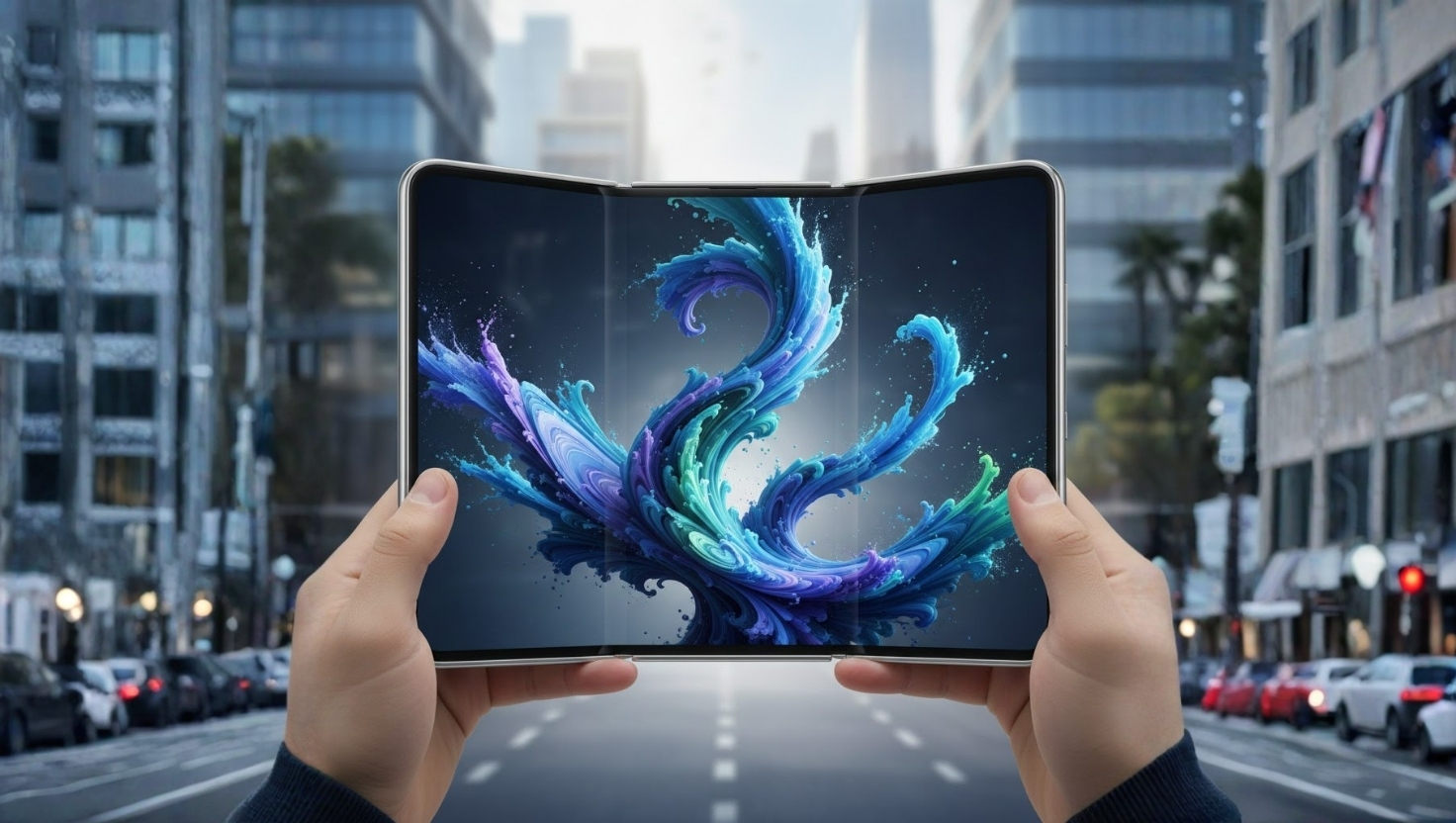
The smartphone industry is no stranger to innovation, but every so often a launch comes along that genuinely shifts the conversation. Samsung’s debut of its first tri-fold smartphone is one such moment. Arriving ahead of the much-rumored folding iPhone, this move isn’t just about releasing another premium device — it’s about redefining what a phone can be.
For years, Samsung has been leading the foldable market with its Galaxy Z Fold and Z Flip series. Now, with a device that folds not once but twice, the company has set a new benchmark for mobile design. And in doing so, it has sent a clear message to its competitors: the future of smartphones won’t be flat.
A New Form Factor: What Is a Tri-Fold Phone?
Unlike traditional smartphones that offer a single rigid display or even standard foldables that open once like a book, Samsung’s tri-fold device features two hinges and three display panels. When fully unfolded, it transforms into a tablet-sized screen, giving users a much larger workspace for productivity, entertainment, and multitasking. Fold it twice, and it becomes compact enough to fit in your pocket.
This design bridges the gap between a smartphone and a tablet better than ever before. Instead of carrying two devices, users can unfold their phone whenever they need a bigger display for tasks like video editing, document reviewing, gaming, or binge-watching content.
The concept may sound futuristic, but Samsung has made it feel surprisingly practical.
Engineering That Pushes Boundaries
Creating a phone that folds three ways is no simple task. The real star of this innovation lies in the hinge system and the foldable display technology. Samsung’s dual-hinge mechanism ensures smooth movement and stability, reducing stress on the screen and improving durability. The inward folding design also helps protect the main screen when the phone is closed.
While early foldables faced criticism for being fragile, Samsung has spent years refining its durability, and the tri-fold design appears to be the result of that experience. Stronger materials, flexible glass technology, and reinforced hinges all play a role in making the device better suited for daily use.
In simple terms: this is not just a bigger screen — it’s a smarter and stronger one.
A Powerhouse for Productivity
A larger display is only useful if the device can back it up with powerful performance — and Samsung delivers on that front as well.
The tri-fold phone is designed with high-end processing power, a large battery to support the expansive screen, and advanced multitasking features through Samsung’s software ecosystem. Users can run two or even three apps side by side, making it ideal for professionals, creators, and multitaskers.
Imagine editing a document on one side, referencing a website on another, and taking notes — all on the same device. That’s the future Samsung is building.
Additionally, Samsung’s ecosystem advantages, like DeX support, make it possible to turn the tri-fold phone into a mini desktop setup when connected to a monitor. This pushes the device beyond entertainment and into true productivity territory.
Launch Timing: Why It Matters So Much
What makes this debut even more significant is when it happened.
For quite some time, rumors about Apple developing a foldable iPhone have been circulating in the tech world. While Apple has yet to officially reveal anything, the demand and curiosity are certainly there. By launching its tri-fold phone first, Samsung gains an advantage not just in technology, but in perception.
It reinforces Samsung’s image as an innovator — a company that doesn’t wait for trends, but creates them.
This early entry also gives Samsung valuable real-world feedback from users, which can be used to refine and improve future versions while competitors are still in the development phase.
Is It for Everyone?
As impressive as the tri-fold phone is, it’s important to recognize that this is a premium, niche device — at least for now. The advanced technology, larger screen, and complex engineering likely mean a higher price point than standard smartphones or even regular foldables.
For the average user who mainly texts, scrolls social media, and streams music, a traditional or single-fold phone might be more practical. But for professionals, tech enthusiasts, designers, gamers, and content creators, the tri-fold device opens up a world of possibilities.
Just like the first foldable phones were once considered experimental and are now becoming mainstream, the tri-fold may follow the same path.
What This Means for the Future of Smartphones
Samsung’s tri-fold isn’t just a new product — it’s a glimpse into the future of mobile technology.
- Smartphones may no longer be limited to one fixed size
- Tablets and phones could merge into one flexible device
- Portability and performance will coexist in smarter ways
- Competition will drive faster innovation in foldable tech
This signals the beginning of a new chapter in smartphone evolution — one where screens adapt to us, rather than us adapting to screens.
Final Thoughts
By unveiling its first tri-fold phone ahead of a folding iPhone, Samsung has once again proven that it’s willing to take risks and push boundaries. Whether this form factor becomes the new normal or remains a premium innovation, it has already achieved something important: it has expanded the imagination of what a smartphone can be.