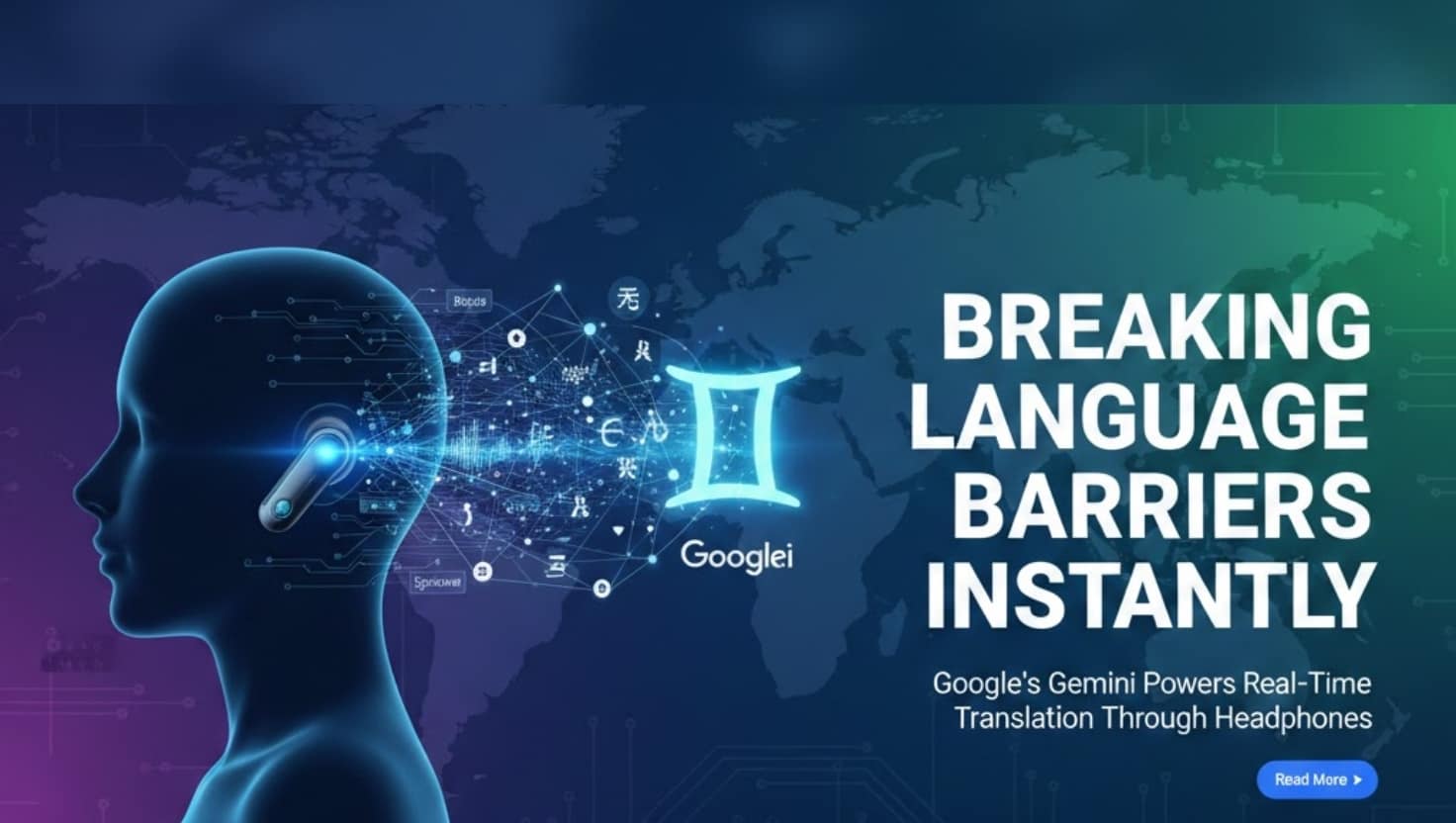
Google has taken another bold step toward a truly connected world by introducing real-time headphone translation powered by Gemini, its most advanced AI model yet. This innovation promises to change the way people communicate across languages—making conversations smoother, faster, and far more natural than ever before. What once felt like science fiction is now becoming an everyday reality.
A New Era of Instant Communication
Language has always been one of the biggest barriers to global communication. While translation apps and tools have existed for years, they often felt slow, robotic, or disconnected from real conversations. Google’s new real-time headphone translation aims to fix exactly that.
With Gemini at its core, the system listens to spoken language, understands context, and translates it almost instantly—delivering the translated speech directly into your headphones. The result is a seamless experience that feels less like using a tool and more like having a multilingual assistant whispering translations into your ear.
How Gemini Makes the Difference
The real breakthrough here isn’t just the headphones—it’s Gemini. Unlike traditional translation systems that focus mainly on word-to-word conversion, Gemini understands meaning, tone, and context. This allows translations to sound more natural and human.
For example, casual phrases, idioms, or cultural expressions are no longer translated literally in a confusing way. Instead, Gemini adapts them so the listener understands the intent behind the words. This context-aware translation is especially important in real conversations, where emotion and nuance matter just as much as accuracy.
How Real-Time Headphone Translation Works
The experience is designed to be simple and intuitive. When someone speaks in a different language, your connected device processes the audio through Gemini. Within moments, the translated version is played through your headphones.
What makes this impressive is the low latency—there’s minimal delay between the original speech and the translated output. This allows conversations to flow naturally, without awkward pauses or interruptions.
In supported setups, the system can even work both ways, enabling two people speaking different languages to talk comfortably in real time.
Practical Use Cases in Everyday Life
The potential applications of this technology are vast:
- Travel: Tourists can communicate with locals, ask for directions, or understand cultural experiences without struggling with language barriers.
- Business: International meetings become more productive, reducing misunderstandings and reliance on human translators.
- Education: Students can attend lectures or workshops in foreign languages and still grasp the content clearly.
- Healthcare & Services: Clear communication becomes easier in critical situations where language gaps can cause serious issues.
By embedding translation directly into headphones, Google removes the need to constantly check a phone screen, making interactions feel more natural and respectful.
Privacy and Accuracy Considerations
Google has emphasized that privacy remains a key priority. Audio processing is designed with secure systems, and users maintain control over when and how translation features are activated.
Accuracy is another major focus. While no AI translation system is perfect, Gemini continuously learns and improves through advanced language models, helping it adapt to accents, speech speed, and regional variations.
Competing in the AI Translation Race
Real-time translation isn’t a completely new concept, but Google’s approach stands out because of Gemini’s deep integration across devices and services. Instead of being just another feature, it feels like part of a broader AI ecosystem that understands users better over time.
As competition in AI-driven communication grows, this move positions Google strongly against other tech giants experimenting with live translation and AI assistants.
What This Means for the Future
Google’s real-time headphone translation is more than a convenient feature—it’s a glimpse into a future where language differences no longer limit human connection. As Gemini evolves, we can expect even more accurate translations, support for additional languages, and deeper personalization.
In the long run, this technology could redefine how people interact globally, making conversations more inclusive and accessible. Whether you’re traveling abroad, working with international clients, or simply curious about other cultures, Google’s Gemini-powered translation brings the world a little closer—one conversation at a time.
In short, Google isn’t just translating words—it’s translating experiences.